Stone Calculator: Tonnage by Grade for Ohio Limestone
Enter your project dimensions
Orders on this ground usually fail on the grade rather than the tonnage. Wet glacial clay punishes a wrong choice quickly: fines packed into a drain trench hold water against a foundation through a wet spring, and clean stone laid straight onto soft clay as a base will still be moving under the tires in July. The stone calculator on this page handles the arithmetic once you know what you are buying. Start with the depth table, then take the grade question seriously before you open the material list.
Depths for Ohio Drains, Entrances, Pads and Paths
| Job | Grade quoted here | Depth to enter |
|---|---|---|
| French or footer drain trench | #57 limestone | 12 inches, or the full trench depth |
| Pipe bedding under a run | #67 stone | 6 inches |
| Backfill behind a retaining wall | #57 limestone | the width of the band, usually 18 to 24 inches |
| Field or construction entrance | #4 crushed stone | 6 inches |
| Base course under a drive or pad | 304 limestone | 4 inches for light use, 6 inches where trucks turn |
| Surface course over a set base | #57 limestone | 2 to 3 inches |
| Leveling bed under flags or pavers | screenings | 1 inch |
| Hard standing over soft, wet ground | railroad ballast | 6 inches |
The depth column is the number that moves an order, not the area. A 500 square foot pad at 3 inches and the same pad at 6 inches are two different deliveries.
What Goes In the Boxes for a Trench, a Pad or a Ring
Three shapes are offered. Rectangle takes length and width in feet. Circle takes a diameter in feet, which is the quick way to size a dry well or a fire ring surround. Multiple areas lets you stack up to five separate footprints and returns one total, so a trench along the north side of the house and a second along the west go in as two entries rather than one guessed average.
Depth is entered in inches and accepts anything from 0.25 up to 24. Pick the material next, because the tons line is calculated from the weight of whatever is selected. There is one optional control, a box that adds 5 percent for compaction and spillage. Press calculate and three figures come back together: cubic yards, tons and cubic feet. The results panel will also email the figures to you.
A trench deeper than 24 inches has to be split into two runs and the volumes added.
#57 Clean or 304 With Fines: the Choice That Sinks Drives
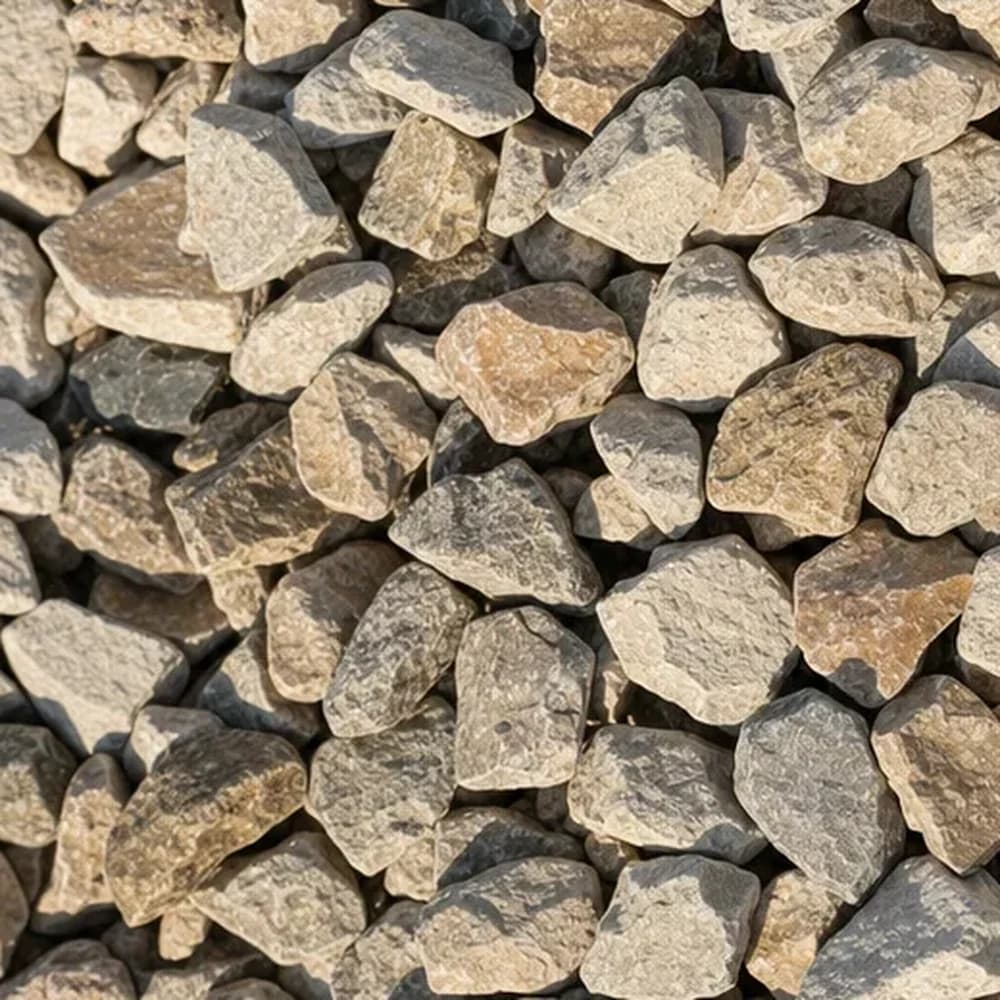
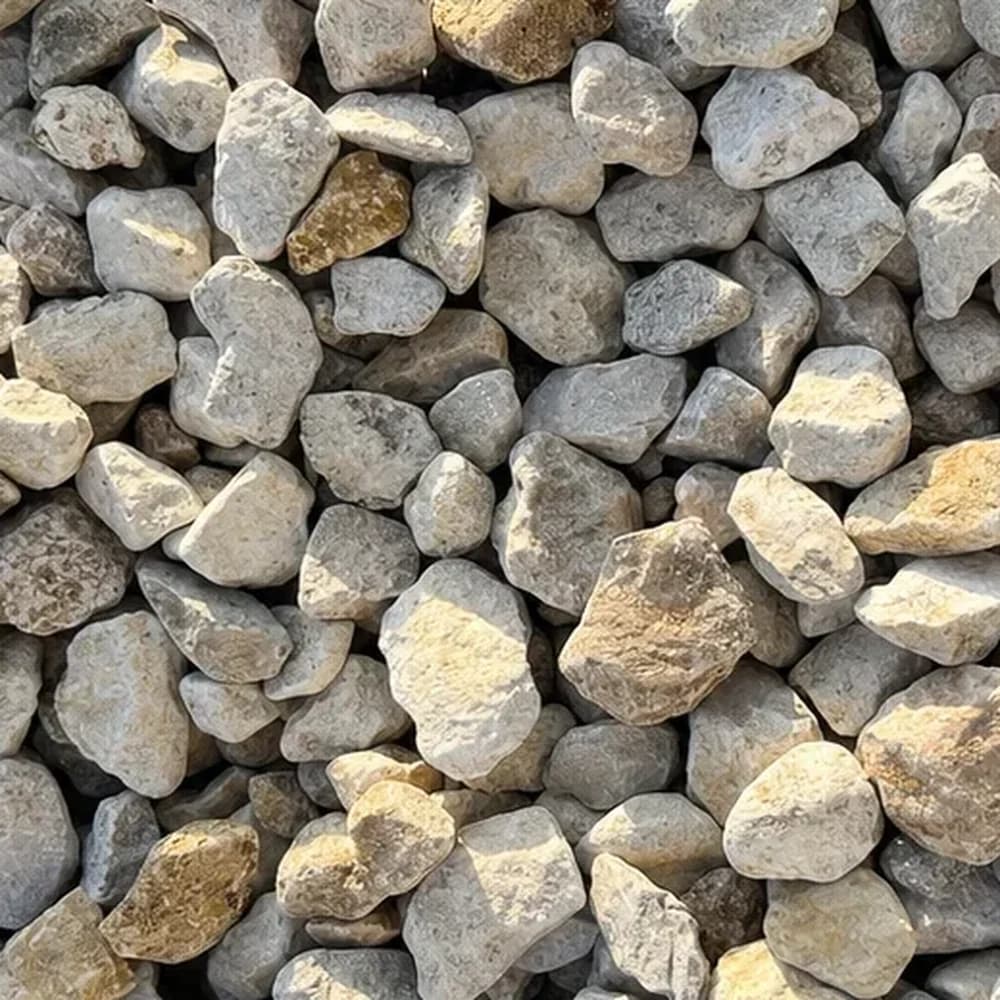
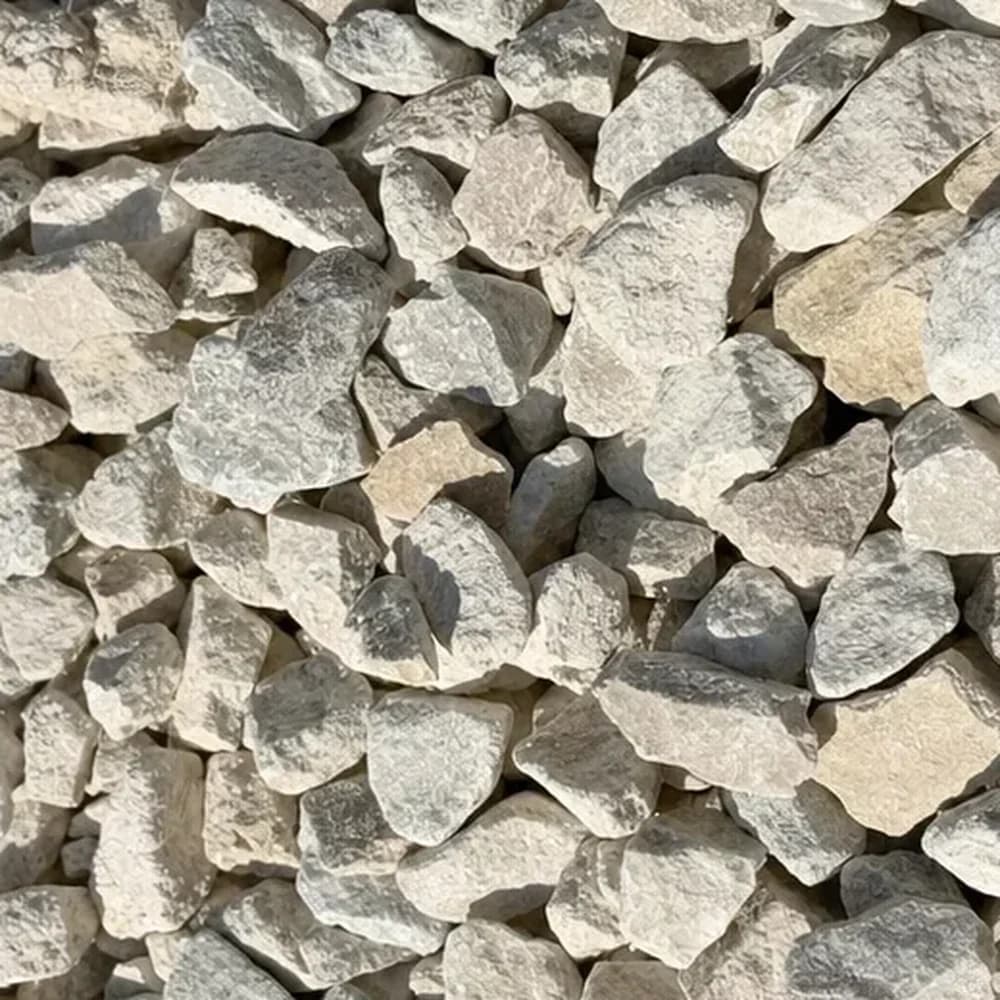
Grade numbers describe size, and the lower the number the larger the stone. #4 runs 3/4 to 1-1/2 inches. #57 is the 3/16 to 1 inch general grade that Ohio yards stock most widely and that plans most often name. #67 is a little finer at 1/4 to 3/4 inch, which is why it goes under pipe. #8 is roughly 3/32 to 3/8 inch, #89 runs from 3/8 inch down into fines, and screenings are fine crushed limestone from about 1/4 inch down to dust. Railroad ballast is heavy angular rock of 1 to 2.5 inches.
Those are all washed or clean grades, with open voids between the pieces. Water moves through them, which is exactly what a drain wants and exactly what a base does not. Material carrying fines behaves the opposite way: 304 limestone and 411 limestone bind and lock up once they are rolled, which makes them a base and makes them useless in a trench where they silt up and hold water.
One naming trap catches people working from plans and permits. A spec that reads 3/4 clean and a yard quoting #57 limestone are usually describing the same stone. Where a permit names a gradation, order the gradation it names.
A Field Entrance and a Dry Well Ring, Worked Through
Both of these use made-up dimensions to show the arithmetic.
A field entrance off the township road. A 12 by 45 foot apron in #4 crushed stone, 6 inches deep. The area is 540 square feet. Volume is 540 x (6 / 12) = 270 cubic feet, and 270 / 27 = 10.0 cubic yards. At 1.45 tons per yard that is 14.5 tons. Tick the 5 percent box and it reads 10.5 yards and 15.2 tons. This is the one place on the property where loaded trucks leave the pavement, so the higher figure is the one to order.
A dry well ring for two downspouts. A pit 9 feet across and 18 inches deep, filled with #57 limestone. Use circle mode and enter 9 feet: the area comes to 63.6 square feet. Volume is 63.6 x 1.5 = 95.4 cubic feet, which is 3.53 cubic yards, and at 1.40 that is 4.9 tons. Wrap non-woven fabric around the stone rather than laying it underneath, or the clay around the pit will silt the voids closed inside a couple of seasons.
Switch that same pit to screenings and the tonnage climbs to 5.1 while the hole stays exactly the size it was. That is the weight table at work, not a measuring error.
Why 2,800 Is Not the Only Figure on the Tons Line
| Material as the list names it | Pounds per cubic yard | Tons per cubic yard |
|---|---|---|
| #57 / #67 / 3/4 inch crushed stone | about 2,800 | 1.40 |
| #89 / #8 / 3/8 inch chips | about 2,800 | 1.40 |
| Stone screenings | about 2,900 | 1.45 |
| #4 stone and railroad ballast | about 2,900 | 1.45 |
| 304 and 411 limestone | about 3,000 | 1.50 |
| Rip rap | about 3,100 | 1.55 |
Cubic yards are fixed by the hole. Tons are not, because a yard of angular material carrying fines holds more pounds than a yard of open clean stone. Selecting the grade before you press calculate is what keeps the two lines honest, and it is why the same trench quoted in two grades comes back at two different weights.
Rounding Up While the Ground Is Still Dry
Angular stone that gets rolled settles by something like 5 to 10 percent, and a little always stays behind in the heap. The 5 percent box covers ordinary settling and spillage on a drainage or surfacing order. Where a drawing calls for a compacted depth, order to the compacted figure rather than treating that box as the allowance.
Working long is worth more here than working tight. Base and drainage jobs run from spring, once the clay has thawed and drained, through to late fall, and half a ton short in the middle of that window leaves an open trench waiting on weather. Round to the next sensible figure, then take that number to the product page, set your quantity and pick a date. Delivery is arranged at checkout by ZIP code, and the truck needs a firm, clear spot to tip on. For armor stone the rip rap calculator uses the heavier 1.55 line, and compacted base layers belong on the crusher run calculator.
Common questions
I changed the grade and the tonnage moved. Same hole, so why?
Because the tons line is weight, not space. The cubic yard figure stayed exactly where it was. What changed is the pounds inside that yard: clean #57 sits on the 2,800 line at 1.40 tons per yard, screenings and #4 on the 2,900 line at 1.45, and anything carrying fines on the 3,000 line at 1.50. Read the yardage when you are comparing jobs and the tonnage when you are buying, since graded stone sells by the ton.
Is 5 percent enough on stone that is going to be rolled?
For a drain, a decorative run or a surface course, yes. For a layer that gets compacted, treat the box as spillage cover only. Rolled angular stone loses roughly 5 to 10 percent of its loose depth, so a 6 inch compacted layer means placing closer to 7 inches loose. Enter the compacted depth the job needs and add that extra deliberately rather than hoping the box absorbs it.
The ditch line drops down a bank. Which length do I measure?
The distance along the slope, walked with a tape on the ground, not the flat distance you would read off a plan. On the hills of southern and southeastern Ohio that gap widens fast, and a ditch measured across the map comes up short every time. Where the ditch also spreads as it falls, take widths at three or four points and average them.
Two trenches meet at a right angle behind the house. One run or two?
Two, using the multiple areas option. Enter each leg as its own rectangle with its own depth and let the tool add the volumes. The thing to watch is the corner where they meet, which otherwise gets counted twice. Shorten the second leg by the width of the first and the overlap disappears.
The bed gets an aluminum edge strip. Does the strip sit inside the area I enter?
Measure to the inside face of the edging, since that is the ground the stone actually covers. Where there is no edging and the stone feathers out into grass, add six inches all round instead. Feathered edges run thin, wash into the lawn after a heavy spring rain and are the first place a bed needs topping up.
Related calculators
Spec'd it? We stock it.
Twelve graded stone products, priced per ton, free delivery across Ohio.