Railroad Ballast: 1 to 2.5 Inch Stone for Ohio Ground That Stays Wet
Railroad Ballast suits Ohio barn sites and equipment areas needing a load-bearing stone course that remains open for drainage through frost cycles.
- Size: Roughly 1 inch to 2.5 inches
- Grading: Graded to interlock under load while draining freely
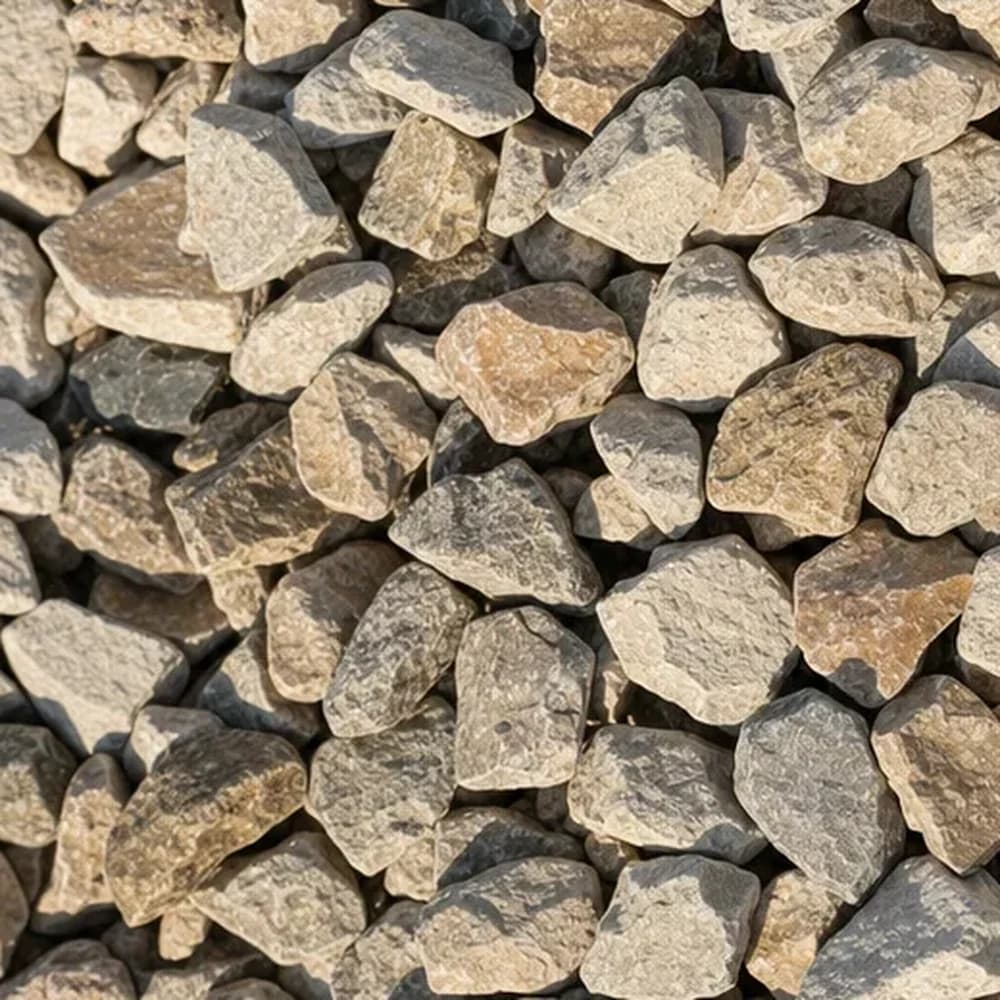
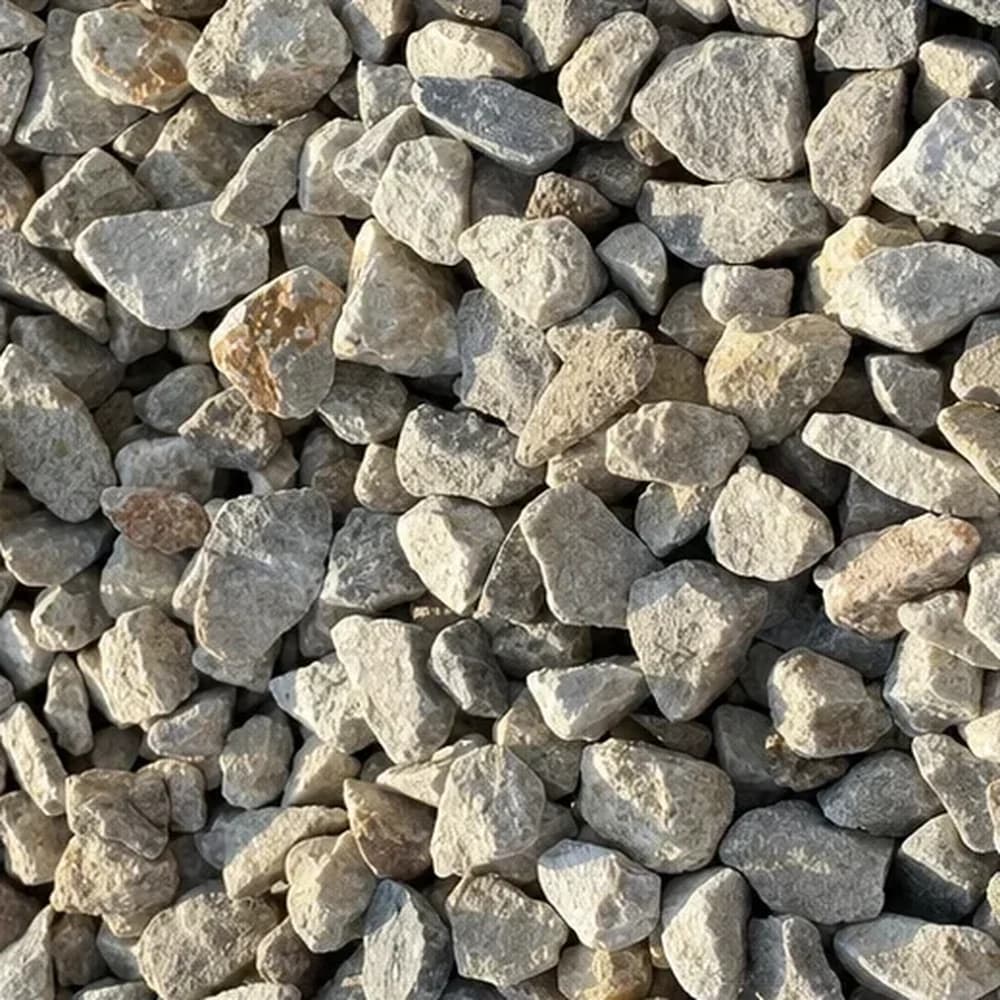
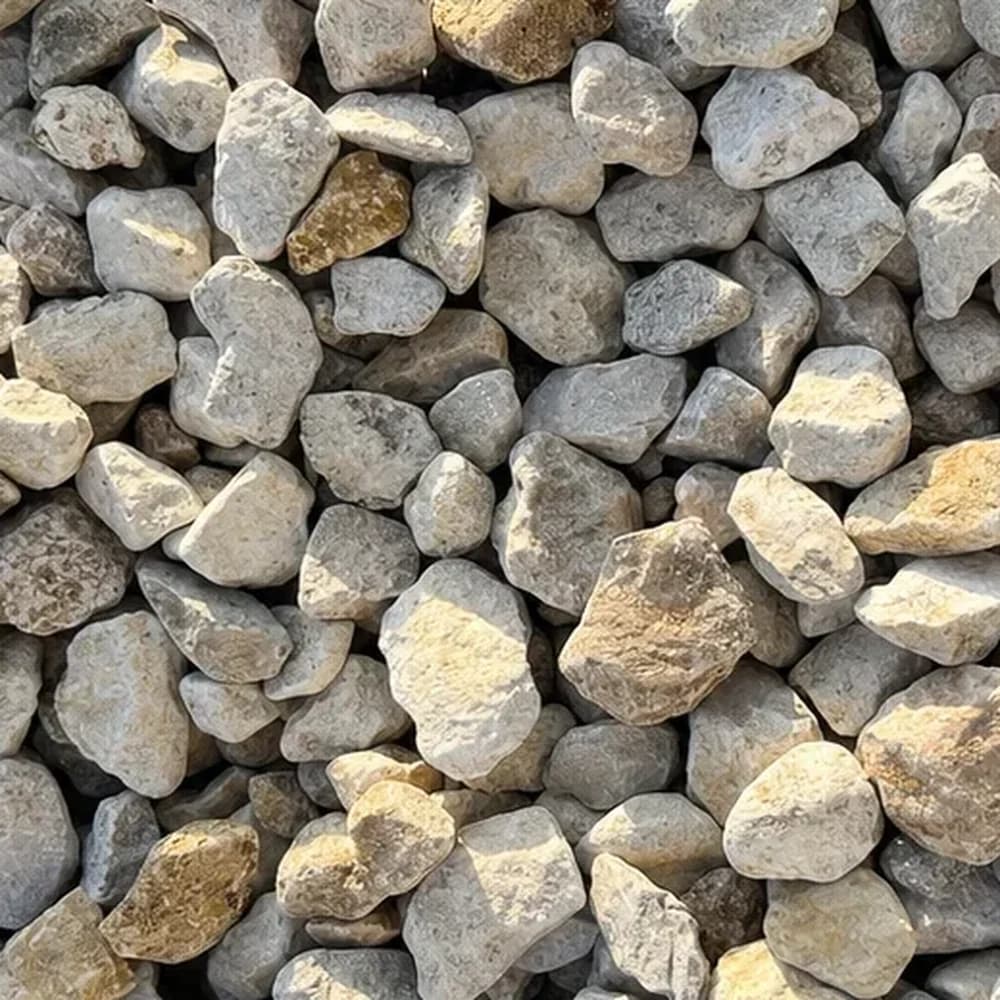
- Type: Large angular crushed stone
From $422 for 1 ton, delivery included (larger loads cost significantly less per ton)
Free delivery included
Free delivery anywhere in Ohio
Pick a delivery date
Weekday delivery, earliest Oct 23
“Got railroad ballast from Ohio Rock Supply and it showed up right when I needed it. Pricing was fair and the whole order was a good value.”
Bill L. · Verified Buyer
Get a Free Quote
Fill out the form and our sales team will get back to you within the hour.
Size and Grading
- Size
- Roughly 1 inch to 2.5 inches
- Grading
- Graded to interlock under load while draining freely
- Type
- Large angular crushed stone
By the second or third spring of watching a yard rut up on wet till, the question stops being which gravel to add and becomes whether anything laid on top is going to hold. That is the decision in front of most people who end up on this page. It is not really a choice between stone sizes. It is a choice between treating the surface again and rebuilding the ground under it with something coarse enough to bridge.
The answers below are in the order people ask them.
Is railroad ballast the fix for a yard that keeps sinking, or is the subgrade the problem?
| Spec | Figure |
|---|---|
| Size | Roughly 1 inch to 2.5 inches |
| Grading | Graded to interlock under load while draining freely |
| Type | Large angular crushed stone |
Both, usually, and in that order. A coarse angular stone is the material you use when the subgrade cannot be relied on, because the pieces bear against each other and spread a wheel load across a wider patch of soft ground than a small stone ever will. The voids between them stay open, so the water that was making the ground soft has a route out instead of sitting under the traffic.
What it will not do is make a bad drainage layout good. On lake plain clay, water under a work surface has nowhere to go on its own, and stone with no outlet just stores it until the frost arrives and lifts everything above it. Give the layer somewhere to drain to and it works. Leave it as a sealed pocket and you have built a reservoir.
How are the pieces sized, and why does one look nothing like the next?
Crushed stone is screened, not cut. A load graded to interlock under load while draining freely will carry pieces across the whole band, from around an inch up to around two and a half, and each one is whatever shape the crusher left. That variation is functional rather than sloppy: mixed shapes wedge against each other, and a layer of identical cubes would not.
It also means the odd piece bigger than the rest turns up, and the practical response is to roll it aside rather than to count it as a fault. What matters for the job is the band, not the individual stone.
What has to sit on top of it before anyone walks or parks there?
Something finer, in most cases. This is a supporting layer, not a finish. Left exposed it is uncomfortable underfoot, it rolls an ankle, and a trailer jack will work its way down between the pieces.
Where the surface has to be firm and even, a compacted 304 aggregate base goes over it, which is the ODOT item Ohio work specifies for base course under pads and drives, and a topping of 411 stone finishes it tighter still. Where the surface only has to carry equipment and shed water, the coarse layer can stay exposed with the understanding that nobody is going to enjoy walking on it. A dust course of screenings is the compromise on a yard that sees both.
Could it go under a single-car gravel drive, a flagstone walk or a raised vegetable bed?
Under a single-car drive, yes, where the drive crosses soft ground. It is the bottom lift, not the running surface, with base and topping built over it. On ground that is already firm it is more stone than the job needs and a smaller grade will do the same work.
Under a flagstone walk, no. A walk wants a compacted base and a fine setting bed, and stone this coarse under a thin hardscape gives you voids the bedding material falls into, which shows up as rocking flags by the second season. Base and screenings is the build-up there.
In a raised vegetable bed, no. A few inches in the bottom of a deep bed as a drainage course is defensible on heavy clay, but the pieces are large enough that soil washes down into the gaps and the bed loses depth. A clean stone in the #57 limestone range is the better choice for that, and most of the bed should be growing medium in any case.
How many tons cover a 25 by 45 equipment yard on wet till?
Take a hypothetical equipment yard, 25 by 45 feet, with an 8 inch lift over a prepared subgrade.
- Area: 25 x 45 = 1,125 square feet
- Depth: 8 inches = 0.667 feet
- Volume: 1,125 x 0.667 = 750 cubic feet
- Cubic yards: 750 / 27 = 27.8 cubic yards
- Tons: this site figures the #4 and ballast family at roughly 2,900 lb per cubic yard, about 1.45 tons per yard, so 27.8 x 1.45 = about 40 tons
For comparison, a hypothetical single-car drive 10 feet wide and 55 feet long with a 6 inch bottom lift is 550 square feet x 0.5 = 275 cubic feet, 10.2 cubic yards, or roughly 15 tons before anything goes on top of it.
Add for the material that works down into soft ground on the first few passes, which on the sticky flats can be a noticeable fraction of a thin lift. The stone calculator will run your own measurements if the yard is not a clean rectangle.
Where does the water go once it is through the stone?
This is the question that decides whether the yard holds. Coarse stone moves water sideways and down quickly, and on a site with fall, a ditch or a tile run, that is the end of it. On the flat ground of the northwest, and in the wet swales of the till plains, there is no natural answer and one has to be built: a shallow grade across the yard to a ditch, a collector along the low edge, or a tile connection where one exists.
Most people also lay a geotextile between the clay and the stone, which stops the two mixing and keeps the voids open for longer. Freeze and thaw only damages a layer that is holding water, so an open, draining layer will sit unchanged for years while a clogged one heaves every March.
Measure the yard, allow for the finishing courses separately, then choose a quantity and a delivery date on this page. Delivery is arranged at checkout once the ZIP code goes in, and a heavy load needs a clear run and room to raise a bed, so check the gateway and anything overhead before you book. Splitting the order into two drops usually beats moving coarse stone the length of the yard with a bucket.
Quickly Calculate How Much You Need
Material: Railroad Ballast
How to Measure
Measure the length and width of your project area in feet
Decide on depth in inches (2" for landscaping, 4" for driveways)
Enter the values above and we'll calculate the tonnage you need
Need help figuring out the right amount? We can help!
Call or text us at (216) 247-5333 and we'll help you calculate the right quantity for your project.
Not sure how much you need? The Stone Calculator has depth guides, coverage charts and worked examples for this material.
Frequently Asked Questions About Railroad Ballast
Customer Reviews
Had railroad ballast delivered by them and everything went smooth. They kept me updated the whole time, and I'm really happy with how it turned out.
Laura P. · Cincinnati, OH · Verified Buyer
Got railroad ballast from Ohio Rock Supply and it showed up right when I needed it. Pricing was fair and the whole order was a good value.
Bill L. · Toledo, OH · Verified Buyer
Ordered railroad ballast from the team and it showed up right when they said it would. Free delivery was a huge plus, and I'm really happy with how easy the whole thing was.
Jennifer E. · Cincinnati, OH · Verified Buyer
Had railroad ballast delivered by them and the free delivery made it an easy choice. Everything showed up when expected and I'm really happy with it.
Nicole E. · Toledo, OH · Verified Buyer
Picked up on a Friday and the railroad ballast was exactly what I needed. Really happy with this company, I'd order again and recommend them.
Brian V. · Cincinnati, OH · Verified Buyer
Railroad Ballast has 5 verified customer reviews with an average rating of 5 out of 5.