#67 Stone: Clean 1/4 to 3/4 Inch Limestone for Ohio Drainage Work
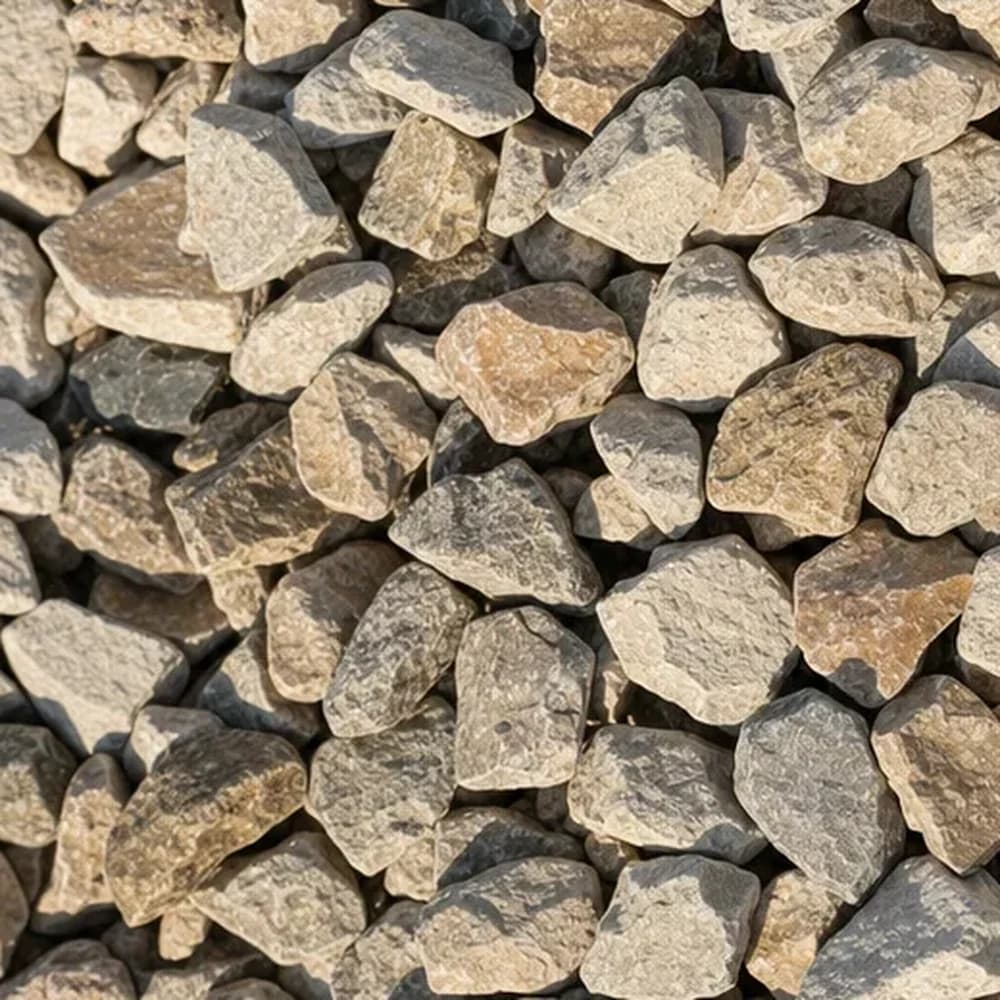
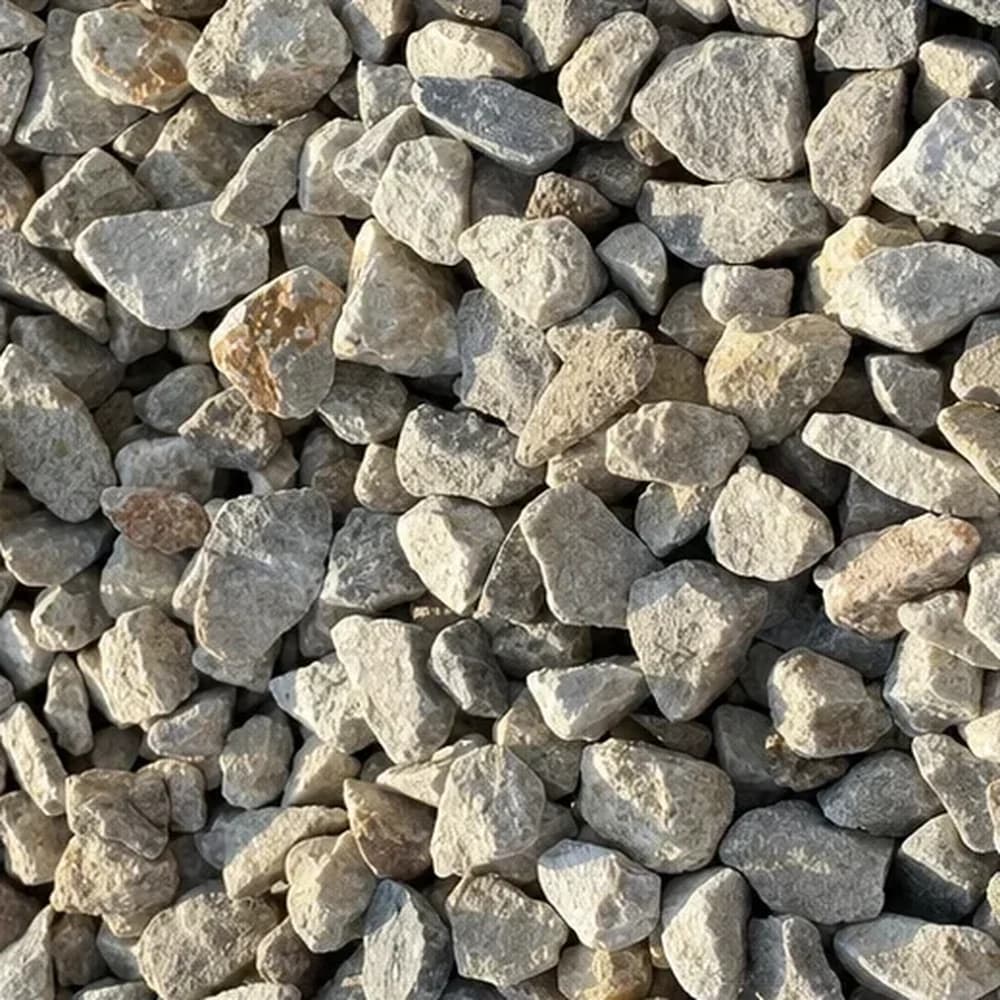
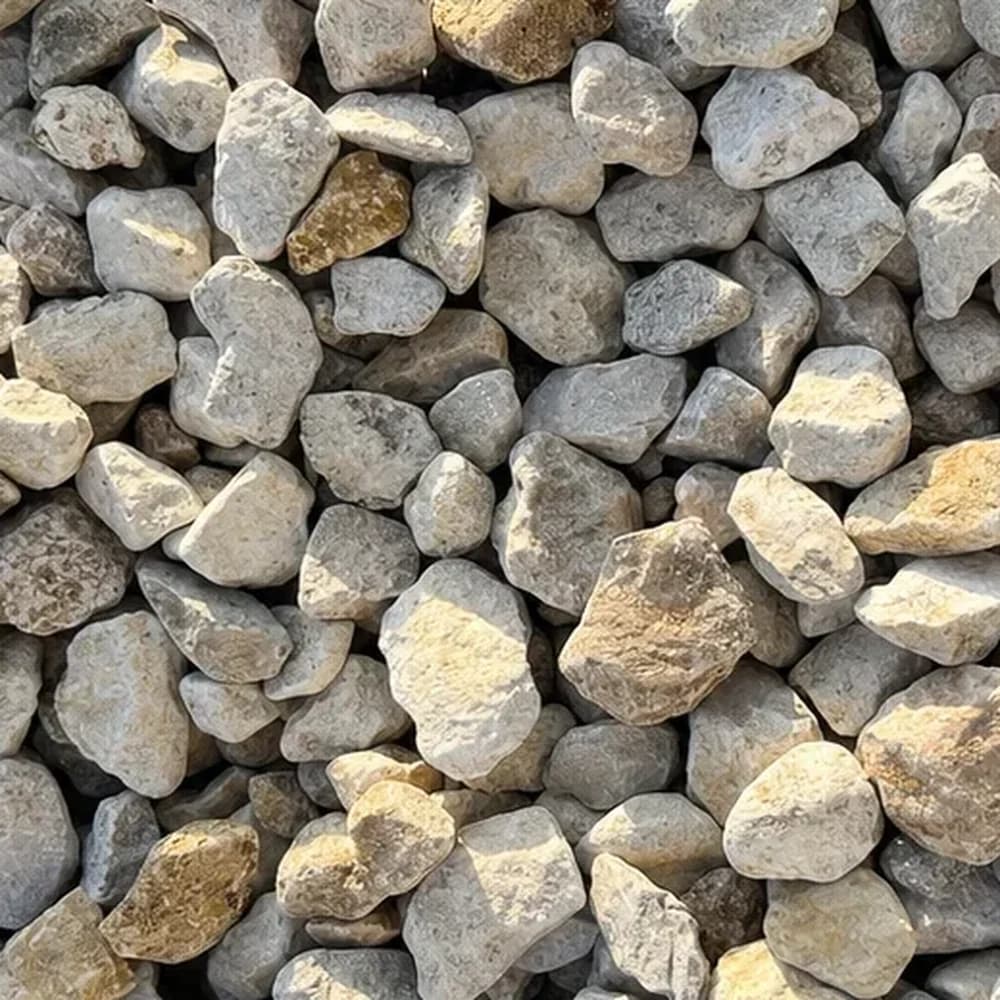
#67 Stone can sit within Ohio drainage runs or concrete work, and its angular crushed texture leaves paths and planting areas uniform.
- Size: 1/4 inch to 3/4 inch
- Grading: #67
- Type: Angular crushed stone
From $448 for 1 ton, delivery included (larger loads cost significantly less per ton)
Free delivery included
Free delivery anywhere in Ohio
Pick a delivery date
Weekday delivery, earliest Oct 23
“Got stone from this company and the price felt fair for what I got. Delivery showed up as planned, and I'm really happy with the whole order.”
Wendy L. · Verified Buyer
Get a Free Quote
Fill out the form and our sales team will get back to you within the hour.
Size and Grading
- Size
- 1/4 inch to 3/4 inch
- Grading
- #67
- Type
- Angular crushed stone
Trenching in Ohio runs on a window rather than a plan. It opens when the frost has come out and the ground has given back its winter water, which on the flat northwest lake plain can be a month later than on a gravel knoll above the Cuyahoga valley, and it closes when the ground freezes hard enough that a cut will not stand and backfill will not settle. Everything about a clean stone job is set by where in that window it falls.
Cut a trench into wet clay in early April and the sides slump overnight and the spoil turns to a paste you cannot backfill with. The same cut in late September stands square, takes the pipe cleanly and closes up tight.
What the window means for #67 stone going into a trench
| Spec | Figure |
|---|---|
| Size | 1/4 inch to 3/4 inch |
| Grading | #67 |
| Type | Angular crushed stone |
Ohio suppliers call clean stone by its size number rather than its inch measurement, so this is the grade to ask for by name. The stone itself does not care about the season. The trench does, and so does the ground around it.
Cold weather is not the limit people assume. The stone can go into a cut in November as easily as in July, because a single-sized clean material has no moisture in it to freeze together and no compaction to achieve. What the season governs is everything else: whether the trench holds its shape, whether the backfill over it settles or bridges, and whether the soil you disturbed washes back into the voids before the site is stabilized.
Opening ground that has been wet since February
Work the trench and the stone in one visit where you can. On till clay an open cut left over a weekend takes in rain, softens at the bottom, and the fine silt that washes off the walls goes straight into the layer you are about to build. That is the mechanism that blinds a drain, and it happens before the job is even finished.
On the lake plain the water table sits high enough in spring that a trench can start filling from below. That is not a reason for more stone. It is a reason to wait for drier ground or to plan an outlet that sits lower than the water you are trying to move. Water has to leave somewhere, and a clean stone layer without an outlet is a reservoir with a neat gray lid.
Most people wrap the stone in geotextile on clay ground for exactly this reason: the fabric keeps silt out of the voids that do the work.
A play area, a boat pad and a lane on the plateau
The 1/4 to 3/4 inch grade suits some of these and not others, and the difference is worth stating plainly.
A play area is not its job. The pieces are crushed and angular, so they are sharp on a knee, and a clean stone will not firm up into a surface. Where the play area sits on wet ground, this grade goes underneath as the drainage layer and a rounded pea gravel finishes the top.
An RV or boat pad is a better fit, though as part of a build rather than the whole of it. A clean stone layer under a pad gives water somewhere to go through a freeze cycle instead of sitting under the slab or the surface, with a compacted 304 aggregate base above it where the pad has to finish firm.
A long lane out to a back field is the case where people reach for the wrong grade. A clean stone will not compact, so it shifts under a tire and finds the low spots. It belongs in the cross drains and the culvert bedding along that lane, not on the running surface, which wants a graded material with fines in it.
Where the stone is genuinely a finish, in a tree ring or a bed edge, the consistent size and the angular face give a tidy surface that does not look like a mixed rock.
Cubic yards for a 75 foot foundation drain and a 12 by 28 boat pad
Take a hypothetical foundation drain, 75 feet along a footing, 20 inches wide, with 12 inches of stone over and around the pipe.
- Width: 20 inches = 1.67 feet, so 75 x 1.67 = 125 square feet
- Depth: 12 inches = 1 foot
- Volume: 125 x 1 = 125 cubic feet
- Cubic yards: 125 / 27 = 4.6 cubic yards
- Tons: this site figures the #57, #67 and 3/4 inch family at roughly 2,800 lb per cubic yard, close to 1.4 tons per yard, so 4.6 x 1.4 = about 6.5 tons
And a hypothetical boat pad drainage layer, 12 by 28 feet at 4 inches:
- Area: 12 x 28 = 336 square feet
- Depth: 4 inches = 0.333 feet
- Volume: 336 x 0.333 = 112 cubic feet, or 112 / 27 = 4.1 cubic yards, about 5.8 tons at the same approximate weight
A machine-cut trench always finishes a little wider than the one you marked out, so round the trench figure up rather than down. The stone calculator will take the same measurements if you want a second check.
Silt, leaves and what the layer needs after two winters
A clean stone drain has no moving parts, which is not the same as needing nothing. The two things that shorten its life are silt arriving from bare ground upstream and organic matter falling into an exposed layer. Get the ground above a drain seeded or covered, keep leaves off any section that is visible, and the voids stay open.
Freeze and thaw do not damage a layer that drains. They damage one that holds water, which is why the outlet matters more than the depth. If a drain that worked for two years starts backing up, look at the outlet first, then at whether anything has silted the top of the stone.
Work out your run, add for the trench that will be wider than you drew it, then set a quantity and a date on this page. Delivery is arranged at checkout by ZIP code, and the truck needs a clear approach and room to lift a bed, so pick the drop before you book. Clean stone rolls, so land it on flat ground and not on the lip of an open cut.
Quickly Calculate How Much You Need
Material: #67 Stone
How to Measure
Measure the length and width of your project area in feet
Decide on depth in inches (2" for landscaping, 4" for driveways)
Enter the values above and we'll calculate the tonnage you need
Need help figuring out the right amount? We can help!
Call or text us at (216) 247-5333 and we'll help you calculate the right quantity for your project.
Not sure how much you need? The Stone Calculator has depth guides, coverage charts and worked examples for this material.
Frequently Asked Questions About #67 Stone
Customer Reviews
Got stone from this company and the price felt fair for what I got. Delivery showed up as planned, and I'm really happy with the whole order.
Wendy L. · Parma, OH · Verified Buyer
Decided on stone from this company and I'm really happy with it, the stone was clean and consistent.
Chris B. · Cincinnati, OH · Verified Buyer
Went with this company for stone and I'm really happy I did. The stone was great quality, and the whole order was easy from start to finish.
Wendy C. · Cincinnati, OH · Verified Buyer
Ordered stone from Ohio Rock Supply and it was spot on. I'd definitely order again and recommend them.
Carlos B. · Akron, OH · Verified Buyer
#67 Stone has 4 verified customer reviews with an average rating of 5 out of 5.