Topsoil Calculator: Lawn Depths Over Sealed Ohio Clay
Enter your project dimensions
A yardage figure is an honest answer to a narrow question, and on this ground it is worth knowing where the answer stops. Four inches of good soil spread over a slab of undisturbed lake plain or till clay behaves like a tray: the roots reach the boundary, stop, and the water that gets through has nowhere to go until the ditches take it. The topsoil calculator below will size the load exactly. What it cannot price is the hour spent breaking up the clay underneath first, and on most Ohio lawns that hour decides the outcome more than the last half yard of soil does.
What the Yardage Figure Does Not Cover
Three things sit outside the arithmetic and should be settled before you order.
The first is the subgrade. Scarify the existing surface at least an inch deep so the two layers knit together. Soil laid onto a sealed clay pan holds water above it.
The second is the grade. Ground next to the house wants to fall away from the wall, roughly 6 inches across the first 10 feet, and no depth of topsoil is a substitute for getting that right.
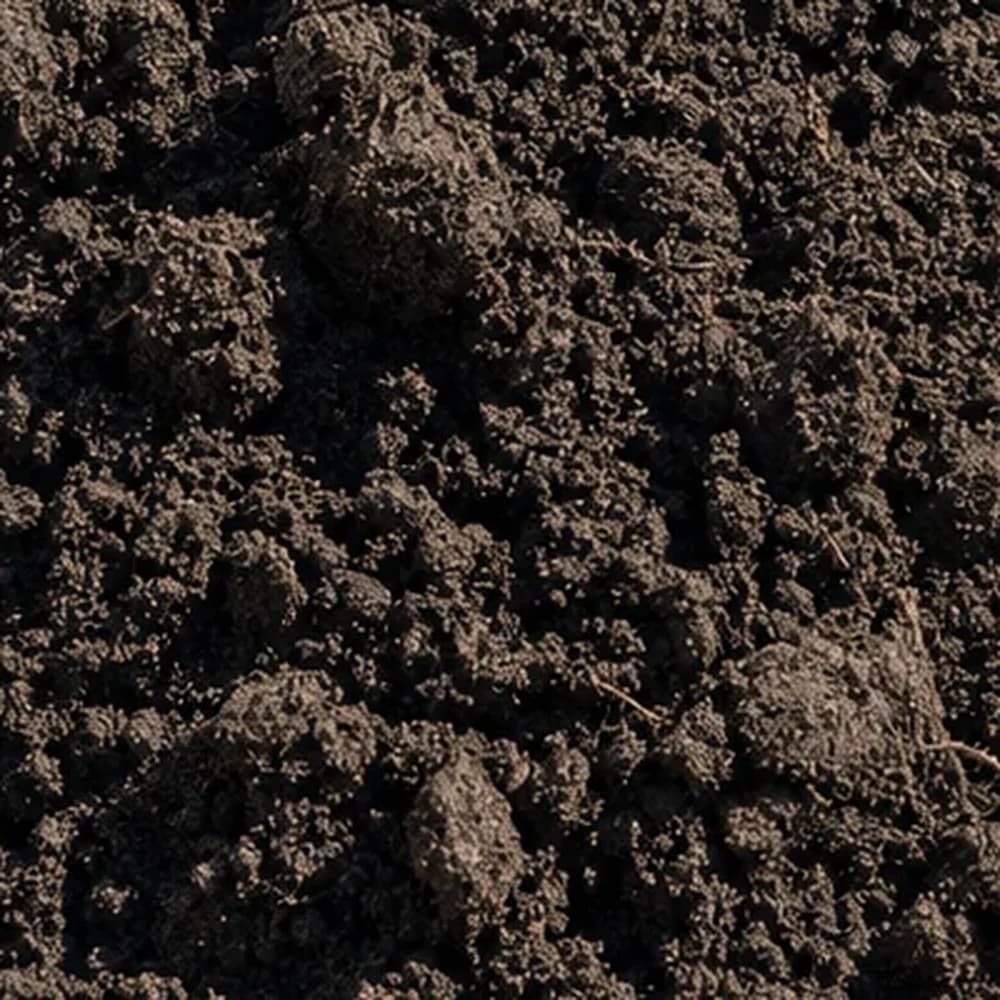
The third is what is actually in the load. Screened topsoil should look dark, smell earthy rather than sour, and crumble. Squeeze a moist handful: it should hold a loose ball and break apart when poked. A smooth ribbon means heavy clay, and material that will not hold at all is mostly sand. Gray coloring or a sour smell points to wet, airless storage.
Cubic Yards on the Invoice, Tons on the Truck
Topsoil is sold by the cubic yard, and the yard is the figure to work with. The tons line matters for the load rather than the order: screened topsoil is published here at about 2,200 lb a cubic yard, which is 1.10 tons, and after a wet week that same yard is heavier to move without covering an inch more ground.
| Depth | One cubic yard covers | Five cubic yards cover |
|---|---|---|
| 1/2 inch topdressing | 648 sq ft | 3,240 sq ft |
| 2 inches | 162 sq ft | 810 sq ft |
| 4 inches | 81 sq ft | 405 sq ft |
| 6 inches | 54 sq ft | 270 sq ft |
Since you buy by volume, rain changes the shovel and not the coverage. Area in square feet, times depth in inches divided by 12, gives cubic feet; divide by 27 for cubic yards; multiply by 1.10 for tons.
Turning a Lawn Into Length, Width and Inches
Rectangle mode takes length and width in feet, and most lawns square off reasonably well once the beds and the drive are taken out. Circle mode takes a diameter, which suits a round bed or a ring being made good. Multiple areas stacks up to five sections, so a front lawn, a side strip and a patch behind the garage go in as three entries, each with the depth it needs.
Depth is entered in inches and runs from 0.25 to 24, which is wide enough to cover a quarter-inch topdressing and a deep repair on the same tool. Select the material so the weight follows, then decide about the optional box that adds 5 percent for compaction and spillage. Cubic yards, tons and cubic feet return together, and the results panel will email them.
A Half Inch Over Thin Grass, Four Inches Under New Seed
Depth is set by the job:
- Topdressing an existing lawn: 1/4 to 1/2 inch, raked so the blades still show through.
- Preparing for overseeding: 1/2 to 1 inch.
- New seeded or sodded lawn: 4 to 6 inches over a loosened subgrade.
- Flower beds: 6 inches blended into the soil below, although a compost blend suits beds better and is sized on the soil calculator.
- Raising a grade: put fill dirt in first and keep the topsoil for the top 4 to 6 inches, where roots live. That lower layer belongs on the dirt calculator.
Topsoil over existing grass works only as a topdressing of half an inch or less. Burying turf under more than that leaves it breaking down unevenly and lumping the lawn for a year.
A Back Lawn and a Scar Along the Water Line
Three examples with invented dimensions.
A 1,450 square foot back lawn at 4 inches for seed. Volume is 1,450 x (4 / 12) = 483.3 cubic feet, which is 483.3 / 27 = 17.9 cubic yards, or about 19.7 tons. Order 18 yards and put the surplus into the low corner by the fence, which on flat clay is where the water was standing anyway.
The same 1,450 square feet topdressed at half an inch. Volume is 1,450 x (0.5 / 12) = 60.4 cubic feet, which is 2.2 cubic yards and 2.5 tons. Same lawn, an eighth of the load, because depth moves a topsoil order far harder than area does.
A trench scar across the side yard. A run 55 feet long and about 2.5 feet wide, settled 3 inches down. Area 137.5 square feet, volume 137.5 x (3 / 12) = 34.4 cubic feet, 1.27 cubic yards, 1.4 tons. Leave it standing slightly proud so it settles flush rather than back into a channel.
Ordering Long Before the Next Wet Spell
Have the soil tipped in the week you intend to spread it. A heap left through a wet stretch weighs a third more per shovel and smears under the rake instead of leveling, and on clay ground the days when spreading is pleasant come in short runs.
The 5 percent box covers spillage and what stays in the heap, which on a lawn-sized order is a real quantity. Round up beyond it where the ground is uneven, because low corners eat more than the average depth suggests and a lawn finished half a yard short shows the seam for a season. When the figure is right, open the Top Soil page, set your quantity and pick a date. Delivery is arranged at checkout by ZIP code, and the truck needs a firm, clear place to tip that is not the lawn you are about to seed. Where beds are being remade in the same pass, Shredded Mulch goes over them once the grading is finished, and the mulch calculator sizes it separately.
Common questions
Does the mulched strip along the beds go in the lawn measurement?
Leave it out and measure to the edge of the grass. Where there is no hard edge and the lawn runs into the bed, take the line where you want the grass to finish and add a foot of overlap, since the joint between the two always needs a little more than the middle of the lawn does.
How do I split an order between fill underneath and the rooting layer?
Run the same footprint twice. First from the current ground to about 5 inches below the finished level, with fill dirt selected at 1.20 tons per yard, then at 5 inches with topsoil at 1.10. Buy the two figures as two products. Topsoil placed at the bottom of a raise does no work down there, and it costs more than the material that should be in its place.
Nothing about this front lawn is square. What do I enter?
Break it into two or three rectangles that between them cover the grass, and enter each as its own area. Curves and angled corners can be squared off to the rectangle that contains them if you would rather have the surplus. At topdressing depths the surplus is a wheelbarrow or two; at seeding depth it is worth cutting the shape up properly.
The lawn only needs bringing up in patches. Do I measure the whole thing?
Measure the patches. Lay a board across each low area, measure down to the soil at the deepest point and near the rim, and average the two for your depth. Enter each patch as its own area, up to five at a time. Spreading a whole-lawn average across ground that is mostly fine buries the good grass and still leaves the hollows low.
I am a yard short with the seed already bought. What now?
Spread what you have to the full depth across part of the lawn rather than thinly across all of it, and seed that part. A short second delivery finishes the rest properly. Grass started on two inches of soil where four was planned stays the weak end of the lawn through the first dry August.
Related calculators
Lawn math done? Soil's on us to deliver.
Screened topsoil by the cubic yard, free delivery across Ohio.