River Rock Calculator: How Deep an Ohio Rock Bed Has to Go
Enter your project dimensions
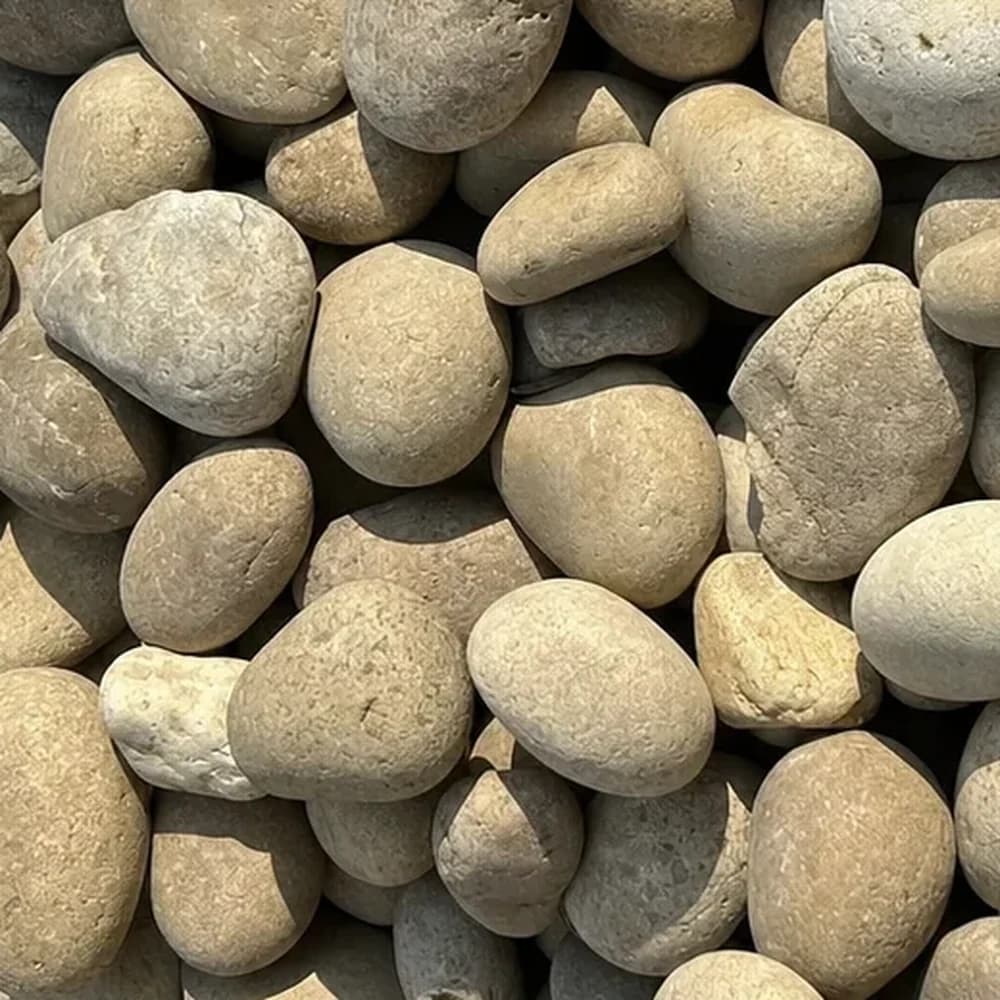
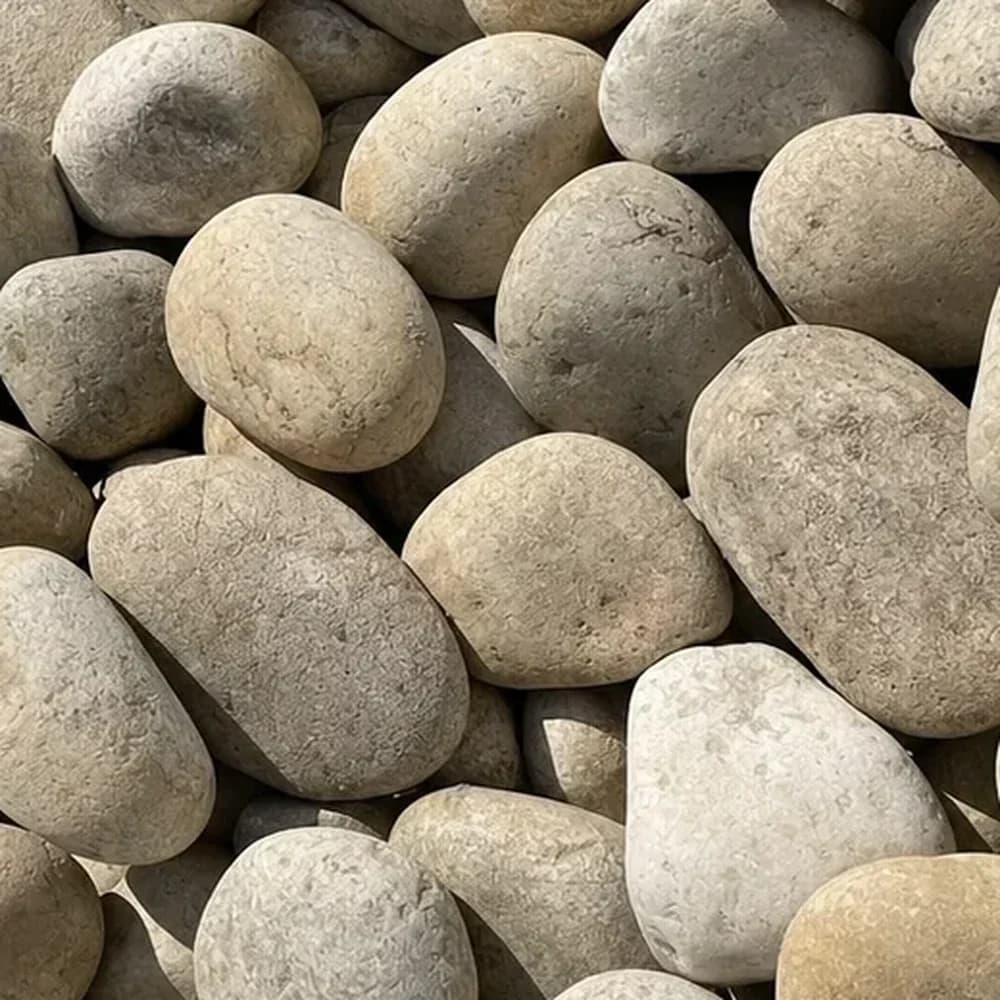
Rounded stone comes in two very different orders, and people reach this page having sized the wrong one. Pea gravel is small enough to lie two inches deep and still hide the ground. River rock is not, and a bed of it laid at pea gravel depth shows fabric by the second summer. On flat till ground that holds spring rain, those beds are also doing real work, carrying roof water away from the wall rather than just looking tidy. So the river rock calculator asks for a depth that matches the stone, and the questions below run in the order most people actually ask them.
How do I measure a bed that curves around the porch?
Square it off. Walk the outer edge, drive a stake at each corner of the smallest rectangle the bed sits inside, and use those two dimensions. The corners you have picked up are small, and rock beds thin out at their edges anyway, so the surplus lands where it gets used.
Length and width go in as feet. A round bed or a tree ring goes in through circle mode, which wants a diameter in feet instead. Beds on three sides of the house are entered separately: the multiple areas option holds up to five footprints and adds them into one total, and keeping them apart matters because the border along the drive rarely wants the same depth as the bed under the front window.
How deep does 1 to 3 inch rock actually have to sit?
The working rule is a layer roughly twice the diameter of the stone, so the pieces can nest instead of sitting in a single rattling course:
| Stone | Depth to enter | One ton covers |
|---|---|---|
| 3/4 to 1 inch river rock | 2 inches | about 120 sq ft |
| 1 to 3 inch river rock | 3 inches | about 80 sq ft |
| Large river rock, 2 to 4 inch | 4 to 5 inches | about 53 sq ft |
| Oversize accent pieces | a single layer | 35 to 50 sq ft |
Against a foundation the bed goes deeper, 3 to 4 inches over fabric with the surface pitched gently away from the wall, so roof water runs along the bed rather than standing at the block. Lay non-woven fabric first and pin it. Bare clay swallows stone, and a bed set straight onto it needs topping up in about three years. Where the rock is carrying active drainage, wrap the fabric around the stone instead of laying it underneath.
Why does a delivered ton look like such a small heap?
Because river rock is the lightest stone in the material list. The calculator prices a cubic yard of it at about 2,700 lb, which is 1.35 tons, so one ton arrives as roughly three quarters of a cubic yard. Next to a yard of crushed stone at 2,800 lb or 304 limestone at 3,000 lb, the same weight of rounded rock makes a visibly smaller pile.
The arithmetic behind the tons line is worth knowing, since it lets you check any figure on the page. Area in square feet, multiplied by depth in inches divided by 12, gives cubic feet. Divide by 27 for cubic yards. Multiply cubic yards by 1.35 for tons. The tool reports all three figures at once and will email them to you.
What do a splash run and a dry creek come to?
Two examples with invented dimensions.
Four downspout splash zones. Pads of 4 by 3.5 feet at each corner of the house, 3 inches of river rock over fabric. Each pad is 14 square feet, so 56 square feet altogether. Volume is 56 x (3 / 12) = 14 cubic feet, which is 14 / 27 = 0.52 cubic yards, or 0.7 tons. Enter them as four areas rather than one, because the pad under the kitchen downspout is usually bigger than the rest and the totals should show it.
A dry creek run across the back lawn. A channel 38 feet long, averaging 5 feet wide, at 4 inches. Area is 190 square feet. Volume is 190 x (4 / 12) = 63.3 cubic feet, which is 2.35 cubic yards and 3.2 tons. With the 5 percent box ticked it reads 2.46 yards and 3.3 tons. Set the anchor stones about a third of their depth into the soil so the run looks water-shaped rather than tipped out, and rinse the whole thing with a hose once it is placed. Quarry dust off the truck leaves the color gray until it is washed off.
Do I take the figure the tool gives me, or round it up?
Round up, and the small box on the form is only part of why. Ticking it adds 5 percent for compaction and spillage, which covers what stays in the heap and what ends up in the grass. It does not cover the front edge of a bed, which is where the rock thins first and where anyone standing on the drive is looking.
A couple of loose wheelbarrows in reserve is the difference between finishing the bed and going back for a top-up. Where the bed sits on clay that has not drained yet, wait for a dry stretch before spreading, since stone pushed into soft ground disappears into it.
River rock, large river rock or drain rock for this job?
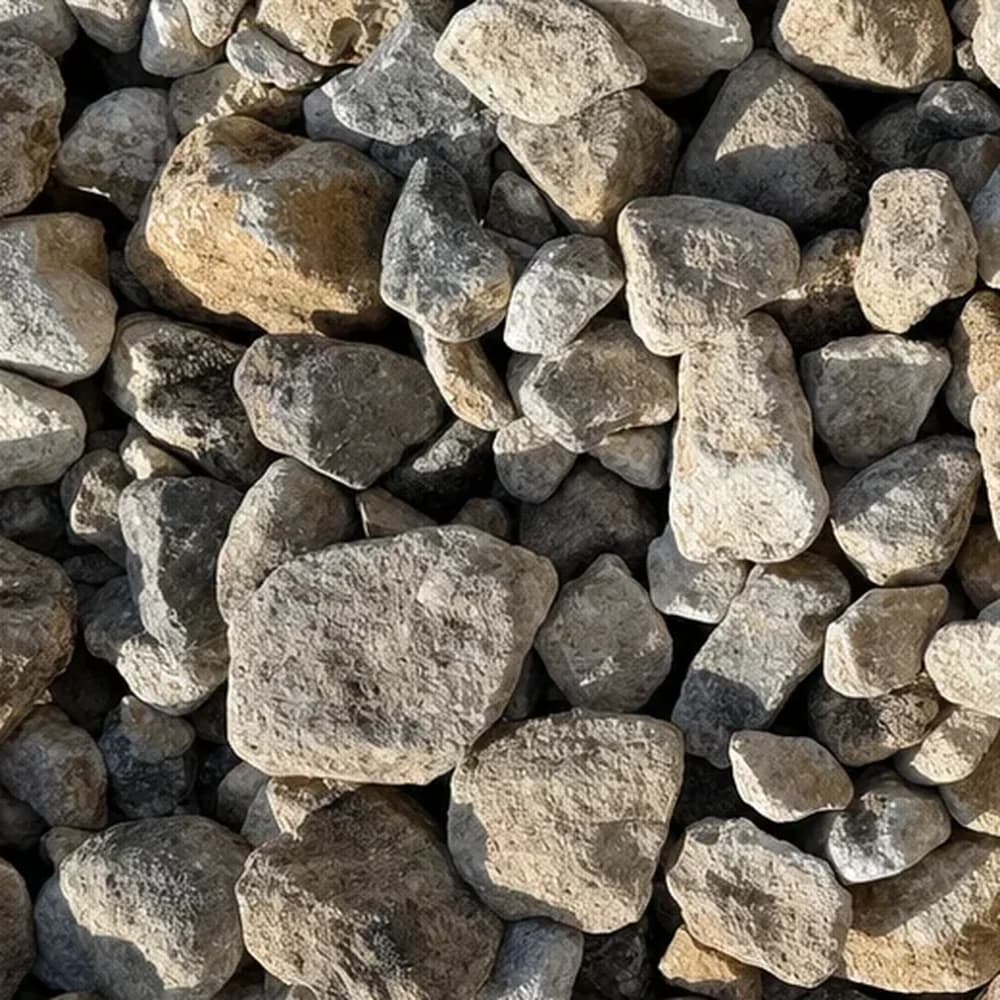
Three products sit behind this tool. River rock at 1 to 3 inches is the general bed, border and splash-zone size. Large river rock takes the anchor positions in a creek run and the heavier erosion work along a bank, and needs the deeper layer to match. Drain rock is the one to reach for where the stone is doing a drainage job below grade rather than a visible one, such as a downspout run into a pit or a bed over a foundation drain.
If you are still weighing rounded stone against something finer for a path or a play area, size it on the pea gravel calculator instead, then compare the two tonnages before deciding. And for a bed that will be planted rather than simply covered, run the same footprint through the mulch calculator: mulch feeds the soil, while stone holds summer heat against it.
Common questions
Can I check the tonnage without the tool?
Yes, and it is worth doing once. Multiply the length and width in feet to get square feet, multiply that by the depth in inches divided by 12 to get cubic feet, then divide by 27 for cubic yards. Multiply the yards by 1.35 for tons. A 20 by 6 foot border at 3 inches works out as 120 square feet, 30 cubic feet, 1.11 cubic yards and 1.5 tons.
Same bed, same depth, so why is crushed stone heavier than river rock?
Rounded river rock is published at about 2,700 lb a cubic yard and crushed stone at about 2,800, with anything carrying fines heavier still at 3,000. The hole does not change, so the cubic yard figure does not change either. Only the tons line moves, which is why the material has to be selected before you press calculate rather than afterwards.
Is the 5 percent box enough when the rock is going straight onto clay?
Not on its own. That box is there for compaction and spillage, not for stone sinking into soft ground. Fabric is what stops that, and without it a bed on wet till loses depth for two or three seasons running. With fabric down and pinned, the 5 percent is a reasonable allowance for a decorative order.
The bed runs down the bank to the ditch. What length do I put in?
The measurement taken along the face of the bank with a tape on the ground, which is longer than the distance across the top. Beds falling toward a ditch or a creek also want the deeper end of the depth range at the bottom, where runoff picks up speed after a storm and moves smaller pieces along with it.
The border turns the corner of the garage into an L. Does that go in as one shape?
Enter it as two, using multiple areas. Take the long leg at its full length, then shorten the return leg by the width of the first so the corner is not counted in both. Five areas can be stacked in one calculation, which is usually enough to cover an entire front yard in a single pass.
Related calculators
Rock beds are a one-time buy.
River rock, large river rock and drain rock by the ton, free delivery included.