Walkway Gravel: 3/8 Inch Crushed Stone for Ohio Paths
Underfoot, Walkway Gravel has a settled feel for garden paths rather than the hard finish of paving. Ohio sites still need drainage planning around clay and frost.
- Size: 3/8 inch
- Grading: Graded mix of stone sizes
- Type: Crushed stone
From $396 for 1 ton, delivery included (larger loads cost significantly less per ton)
Free delivery included
Free delivery anywhere in Ohio
Pick a delivery date
Weekday delivery, earliest Oct 23
“Got walkway gravel from the team and ordering was super easy. The driver was friendly and careful about where he dropped it, really happy with everything.”
Dana H. · Verified Buyer
Get a Free Quote
Fill out the form and our sales team will get back to you within the hour.
Size and Grading
- Size
- 3/8 inch
- Grading
- Graded mix of stone sizes
- Type
- Crushed stone
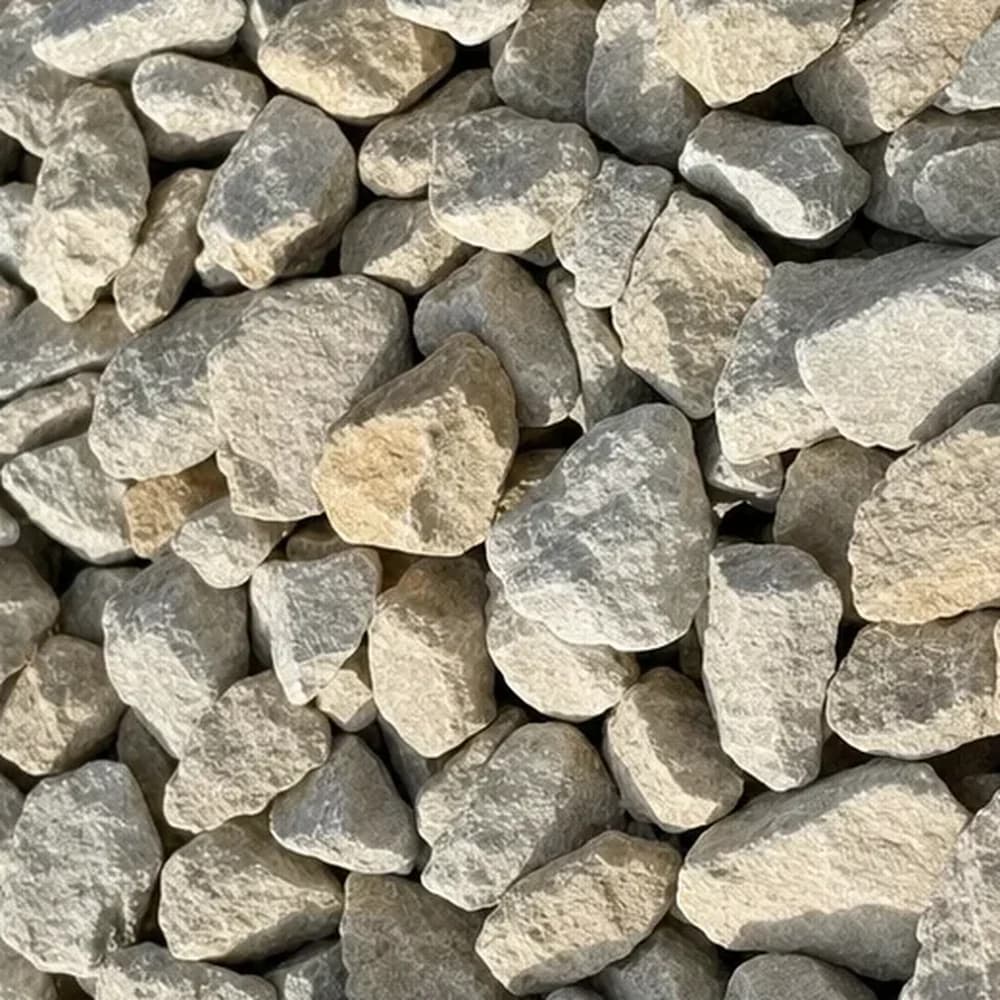
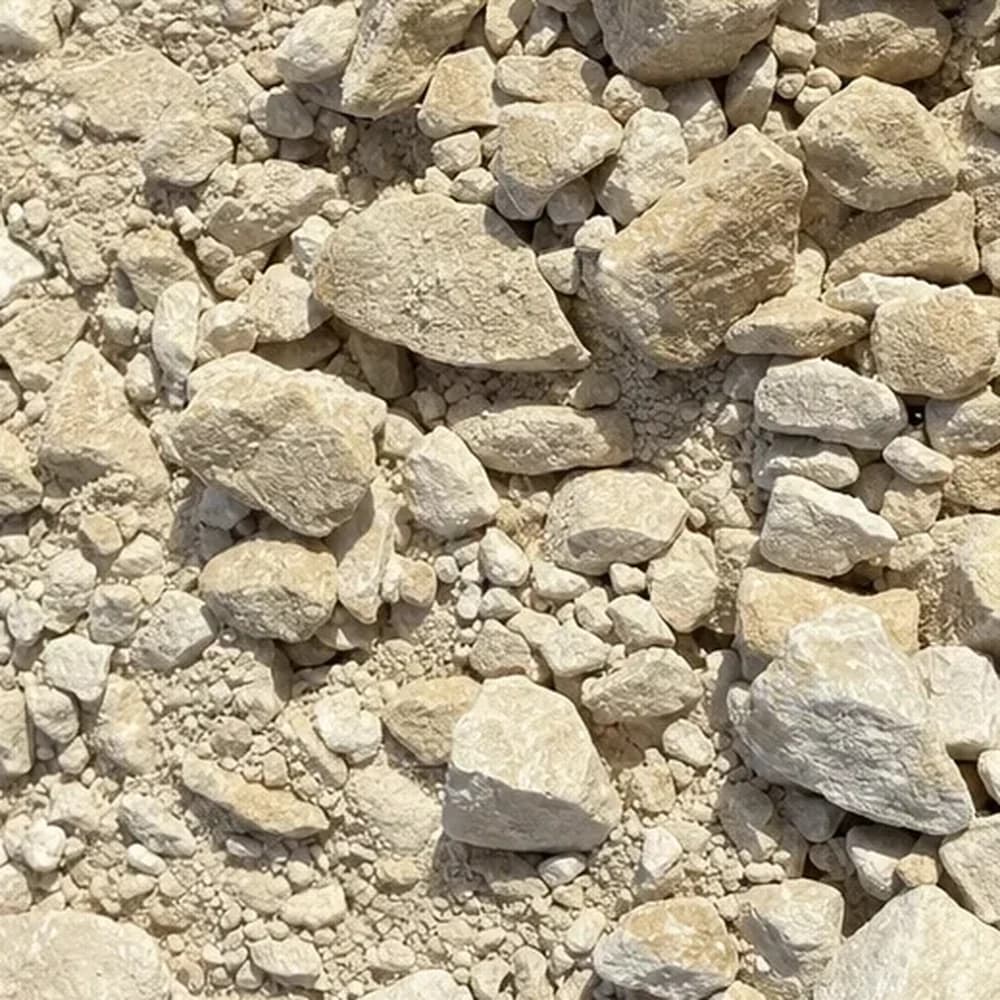
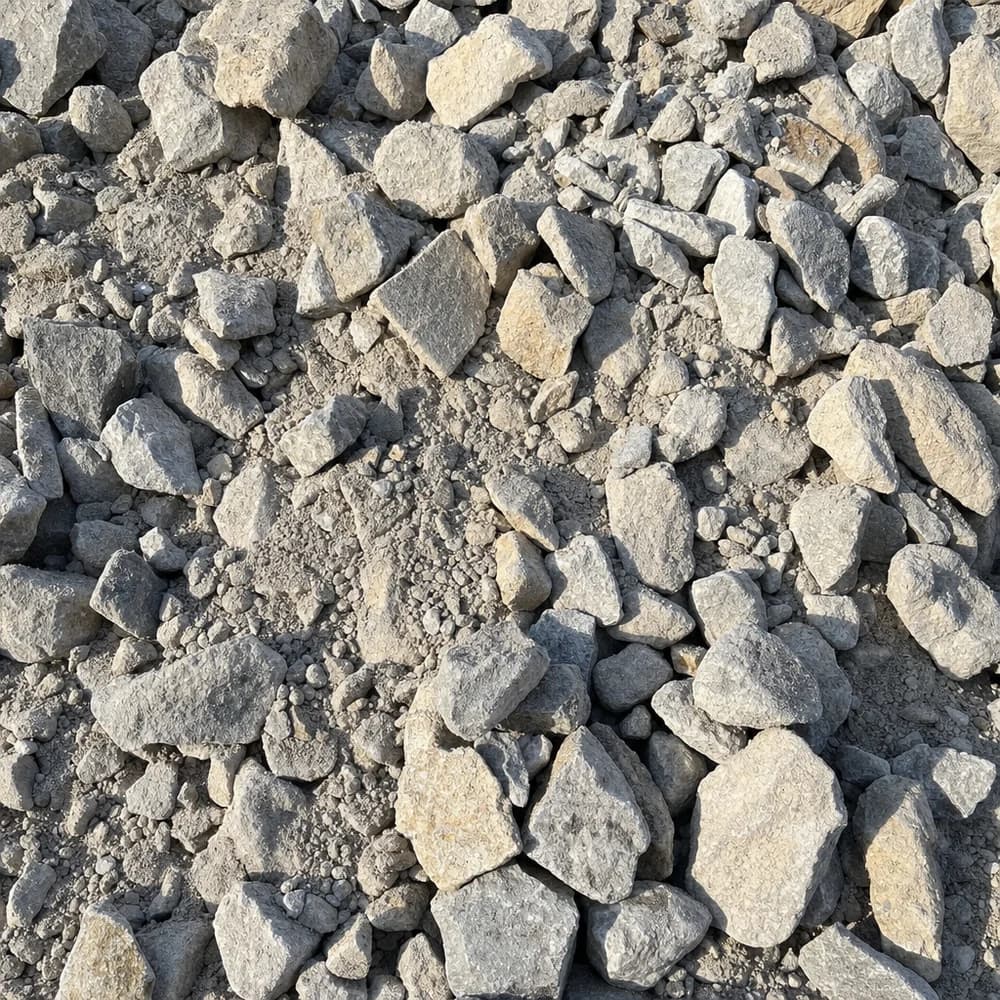
Run a handful through your fingers and it behaves nothing like a decorative stone. The pieces are around 3/8 inch and crushed rather than worn, so they have flat faces and sharp corners, and the load carries a graded mix of sizes rather than one. Squeeze it and it holds its shape for a moment. That is the fines and the angular faces doing what they do, and it is the reason walkway gravel packs into something you can walk on instead of shifting under every step.
The trade-off comes with it. Crushed material with fines in it makes dust in a dry August and it tracks indoors on wet boots, which is the honest counterweight to a path surface that stays put.
Choose walkway gravel for the back door path and for flagstone joints
It earns its place on foot traffic: the route between the drive and the back door, a side yard run beside the garage, a garden path that curves through beds, a service strip along a fence line. Compacted at a walking width, it gives a firm, even surface that drains after a downpour instead of holding a puddle, and that matters through a wet Ohio spring when the alternative is a strip of bare clay tracking mud onto a porch.
It also fills the spaces around flagstone and concrete stepping stones neatly, bedding them in, keeping weeds down in the joints and stopping the mud that otherwise collects between pieces.
Skip it for a shed pad, a downspout splash area and wall backfill
Three jobs come up often and all three want something else.
A shed or garage pad carries concentrated weight and needs a thick, rolled structural layer, not a fine surface course. That is 304 aggregate base, built in lifts and compacted, with the pad set on top of it.
A downspout splash area takes concentrated water off a roof. Fines wash out of a fine crushed gravel in that situation and end up in a fan across the lawn, and the low spot comes back. Rounded river rock over a small stone bed handles the splash and keeps its shape.
Retaining wall backfill has one job, which is to let water out from behind the wall so pressure does not build. Fines are exactly what you do not want there. #57 limestone is the clean stone for it.
Surface, not structure: what carries the path underneath
On glacial till, and more so on the slow-draining clay of the lake plain, a path is only as good as what is under it. A surface course laid straight onto soil mixes into the soil, and the freeze-thaw run does the rest over the first winter.
Strip the sod and soft topsoil, shape the route so water leaves it sideways rather than running along it, and compact the subgrade. Put in a base course of 411 stone, commonly around 4 inches for a foot path, and roll it. Many people lay landscape fabric between the subgrade and the base on clay to stop the two mixing. Then spread 2 inches of the fine crushed material as the walking surface and compact that as well. Set an edge, in timber, steel or a mown shoulder built up to grade, because an unedged path spreads sideways and thins in the middle.
Yards for a 40 foot path to the back door
Take a hypothetical path, 40 feet long and 3 feet wide.
- Area: 40 x 3 = 120 square feet
- Surface course at 2 inches: 120 x 0.167 = 20 cubic feet, and 20 / 27 = 0.74 cubic yards
- Base course at 4 inches: 120 x 0.333 = 40 cubic feet, and 40 / 27 = 1.5 cubic yards
So roughly three quarters of a yard of surface material over a yard and a half of base. Widen the same path to 4 feet and the surface figure goes to 160 x 0.167 = 26.7 cubic feet, or 1.0 cubic yards, which is worth knowing before you settle the width. Tonnage depends on the density figure the site applies to this material, so put your own measurements through the gravel calculator and let it convert the yards. For an approximate figure now, the site publishes about 2,800 lb per cubic yard for driveway and walkway gravel, near enough 1.40 tons per yard, so the 3 foot path takes roughly 1.0 ton of surface material and the 4 foot version about 1.4 tons.
The first spring, and what the path asks of you
A new path loses a little material into the base and a little to the edges in its first months, particularly where people turn a corner or step off onto grass. Top those spots up once rather than fussing at them, and the surface stabilizes. After the first winter, look for where water has run along the path rather than off it, because that is the spot that will keep washing until the fall is corrected.
Seasonal upkeep is light. Rake the high shoulders back into the middle in spring, top up thin patches, and pull the leaves off in fall so the organic layer does not turn the top into soil. Freeze-thaw will lift the surface slightly through winter on wet clay; a pass with a rake in April puts it back.
Measure your route, work the base and the surface separately, then choose a quantity and a delivery date above. If the path crosses ground that stays wet, send the layout through the contact page and Ohio Rock Supply can look at the build-up with you.
Quickly Calculate How Much You Need
Material: Walkway Gravel
How to Measure
Measure the length and width of your project area in feet
Decide on depth in inches (2" for landscaping, 4" for driveways)
Enter the values above and we'll calculate the tonnage you need
Need help figuring out the right amount? We can help!
Call or text us at (216) 247-5333 and we'll help you calculate the right quantity for your project.
Not sure how much you need? The Gravel Calculator has depth guides, coverage charts and worked examples for this material.
Frequently Asked Questions About Walkway Gravel
Customer Reviews
Got walkway gravel from the team and ordering was super easy. The driver was friendly and careful about where he dropped it, really happy with everything.
Dana H. · Cleveland, OH · Verified Buyer
Got walkway gravel from them, delivery came exactly when expected and the driver was friendly and careful about where he placed it.
Heather F. · Parma, OH · Verified Buyer
Needed walkway gravel and Ohio Rock Supply made ordering quick and easy. Delivery showed up when expected, and I'm really happy with how it turned out.
Brian T. · Columbus, OH · Verified Buyer
Ordered walkway gravel from them and the free delivery was a nice bonus. It arrived right on schedule, and I'm really happy with how it turned out.
Mark H. · Parma, OH · Verified Buyer
Refreshes a worn walkway
I used it to refresh a worn garden walkway. The size is comfortable underfoot and it stays fairly well contained. The result at my place in Toledo, OH looks finished and has held up well.
Riley D. · Toledo, OH · Verified Buyer
Walkway Gravel has 5 verified customer reviews with an average rating of 5 out of 5.